A garage door usually gets judged on a simple standard: it should open when asked, close without hesitation, and stay quiet enough that nobody notices it. The trouble is that most doors do not fail all at once. Performance slips in stages. A motor strains a little more than it used to. The door shudders at one point in travel. The remote works from the driveway one day and only from two metres away the next. By the time the problem becomes obvious, the repair is often larger, more urgent, and more expensive than it needed to be.
That is why it helps to think about garage door performance as a combination of repairs, routine servicing, and replacement when parts have reached the end of their useful life. A good fix garage door strategy is rarely about a single dramatic intervention. More often, it is about understanding what has changed, what can be adjusted, and what should simply be renewed before it causes bigger trouble.
In practical terms, most service work falls into familiar categories. Garage door businesses commonly handle repairs, servicing, installations, and replacement of components such as motors, remotes, and springs. Those jobs sound straightforward on paper, but garage door resource the right decision depends on symptoms, safety, age of the hardware, and local conditions. In coastal areas such as the Gold Coast, salt air, humidity, and heat can all add wear to hardware and increase maintenance needs. A door that might tolerate neglect in a milder environment often complains sooner near the coast.
What poor garage door performance actually looks like
Many homeowners describe the problem in broad terms. The door is “playing up” or “getting stuck.” That is understandable, but diagnosis gets easier when the symptoms are more specific. A door may be slow to respond, noisy during travel, inconsistent in closing, or visibly uneven. Sometimes the opener works but sounds laboured. Sometimes the door moves by hand, yet the motor cannot manage the full cycle. Sometimes the issue appears only in the morning, then disappears later in the day.
One of the most common complaints is a garage door not closing properly. That phrase can mean several different things. The door may begin to close and then stop halfway. It may reach the floor and reverse. It may sit slightly crooked in the opening, leaving a gap on one side. It may close fully one day and refuse the next. Those differences matter because they point to different kinds of work. A closing problem can be caused by worn components, motor issues, or garage door alignment problems, and each has a different remedy.
Another clue is how the door behaves manually. If a door feels awkward, uneven, or heavier than expected when operated by hand, that points away from remotes and toward mechanical issues. If the door itself moves well but the operator struggles, a garage door opener repair may be the more relevant path. That distinction saves time and avoids replacing a part that was not the real cause.
Repairs solve the immediate fault, but only when the diagnosis is honest
The repair side of the industry often gets the most attention because breakdowns are disruptive. A door that traps the car inside on a workday morning instantly becomes a priority. Yet the difference between a durable repair and a short-lived patch usually comes down to how carefully the fault is identified.
Take motors as an example. Motor replacement and installation services are commonly offered, including automation upgrades for existing garage doors. That does not mean every underperforming door needs a new motor. In practice, some doors are hard on motors because the door itself is no longer moving cleanly. If the hardware is dragging or balance is poor, the operator has to work harder than it should. Replacing the motor without addressing the underlying resistance can improve performance for a while, but it leaves the stress in the system.
The same logic applies to remotes. If a remote becomes intermittent, it is tempting to treat it as a simple remote issue. Sometimes it is. But intermittent response can also be part of a wider system problem. That is why experienced technicians tend to look at the whole setup instead of only the component that seems most annoying in the moment.
Springs are another clear example of why honest diagnosis matters. Spring replacement is a standard repair offering, and for good reason. Springs do a great deal of the lifting work in a garage door system. When they weaken or fail, performance changes fast. The door may feel much heavier, move unevenly, or become unreliable. There is also a safety dimension that cannot be brushed aside. Springs are under high tension and are dangerous to adjust or repair without the proper training and tools. This is one of those jobs where confidence can be a liability. People see a spring, assume it is just another piece of hardware, and underestimate the force stored in it.
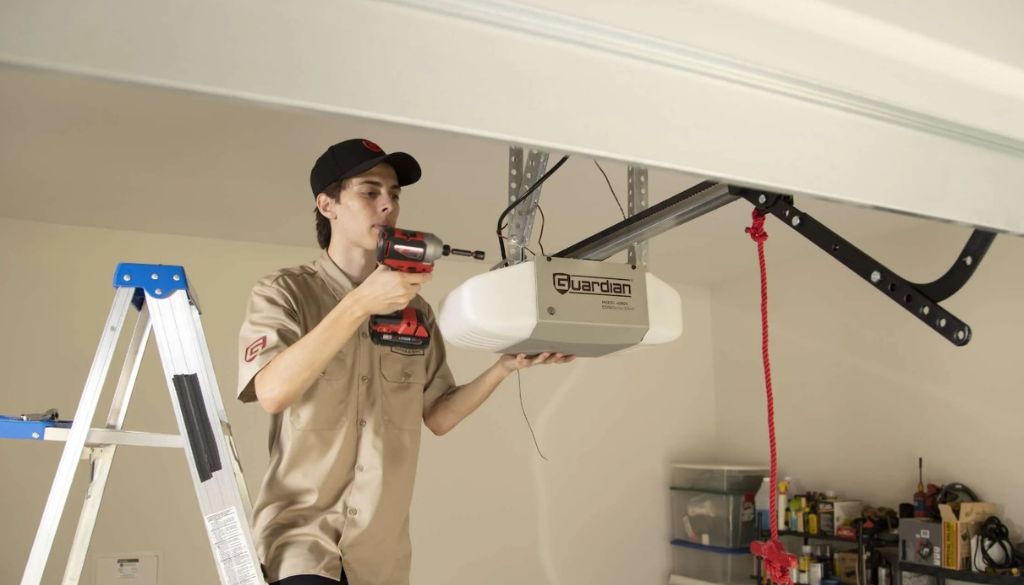
A detail that often surprises homeowners is that when one spring breaks, both springs may need replacement. The reasoning is simple enough. Springs in the same system usually wear at a similar rate, and mismatched springs can create balance problems. On paper, replacing only the broken spring can look cheaper. In practice, it can lead to another failure sooner than expected or leave the door behaving unevenly.
Why servicing often prevents the repair you were dreading
Routine servicing is not exciting, which is probably why it gets postponed. People rarely book maintenance for a door that still opens and closes. The issue is that garage doors often keep working while their condition gradually worsens. By the time the signs are obvious, servicing would have been the cheaper call.
At least one garage door business in the Gold Coast recommends professional servicing every 12 months to help prevent breakdowns and extend the life of the door and motor. That interval makes practical sense, especially in environments where salt air, humidity, and heat are working against metal components and moving parts. Annual servicing creates a chance to spot wear before it becomes failure. It also gives the owner a more realistic picture of what is happening inside the system.
A proper service visit is valuable because it treats the door as a system rather than a collection of isolated parts. The motor, the springs, the hardware, the alignment, and the controls all affect one another. A door that is slightly out of line can place extra strain on the opener. Springs that are no longer matched to the door can change how smoothly it travels. Small issues stack on top of one another until the door feels unpredictable. Servicing breaks that pattern by catching the first few shifts in performance.
I have seen the difference this makes in ordinary households. One owner will call at the first sign that the door is changing, perhaps because it sounds rougher or hesitates near the floor. Another waits until the door stops shutting altogether. The first job is often controlled, scheduled, and relatively calm. The second usually happens under pressure, with a car stranded, a security concern, or both. The hardware may not look very different between those two homes, but the timing changes the whole experience.
Garage door alignment is more important than it sounds
Garage door alignment is one of those phrases that can sound technical and abstract, yet the effects are very easy to notice. When a door is aligned properly, it travels evenly and sits square in the opening. When it is not, symptoms appear in familiar ways. The door may look slightly crooked during movement, drag at one side, or leave an uneven gap when closed. The opener may sound as though it is working harder at one point in the cycle.
Alignment issues deserve attention because they can create secondary problems. A door that is not tracking or sitting correctly can put extra load on the operator and contribute to premature wear elsewhere in the system. That is why a door that seems to need a garage door opener repair may actually need mechanical correction first. If the opener is forcing a misaligned door through its travel, the motor is compensating for a fault it was never meant to solve.
This is one of the trade-offs that comes up in service discussions. Some repairs feel more urgent because they affect convenience directly, while alignment work can be dismissed as cosmetic or minor. In reality, alignment often sits in the middle of performance, reliability, and lifespan. It is not just about appearance. It is about whether the whole door is moving in a way that the rest of the system can support.
When the opener is the problem, and when it is not
Because the opener is the obvious piece of automation, it gets blamed often. Sometimes that blame is justified. Garage door opener repair is a common need, and operator systems do fail or degrade over time. Motors can require replacement. Existing doors can also be upgraded with automation, which is useful for households moving from manual operation to a motorised setup.
Still, a wise approach is to ask one basic question before focusing on the opener: is the operator failing, or is it reacting to resistance elsewhere? A door that is balanced and moving freely places very different demands on a motor than one that is struggling mechanically. If the door itself is not in good order, the opener is working uphill.
That is why replacement decisions should be made with context. A new motor can restore convenience and reliability when the operator truly is the weak point. It can also be a sensible upgrade when an existing door is still structurally worth keeping but the automation is no longer adequate. On the other hand, replacing the motor alone will not correct spring issues, alignment problems, or general mechanical wear.
The practical lesson is simple. The opener matters, but it should be assessed as part of the larger system. That approach reduces guesswork and prevents a lot of disappointing “repairs” that only shift the symptoms for a few months.
The parts that should never be treated casually
Some garage door faults are annoying. Others carry real risk. Springs belong firmly in the second category. Industry safety guidance is clear that garage door springs are under high tension and dangerous to adjust or repair without proper training and tools. This is not routine DIY territory.
There is a tendency to underestimate these jobs because the mechanism is exposed and looks accessible. A person might feel capable of tightening, loosening, or swapping a spring after watching a few minutes of video somewhere online. The problem is not access. The problem is stored force. A spring under tension can release energy violently and without much warning. The consequences can be serious.
The safer approach is to know where your own line is. Basic awareness of symptoms is useful. Attempting tension work without proper training is not. The same caution applies when a spring has broken and the owner is tempted to replace only the visibly failed part. Since both springs usually wear in similar ways, and mismatched springs can create balance problems, the decision should be made with the system in mind, not just the broken piece.
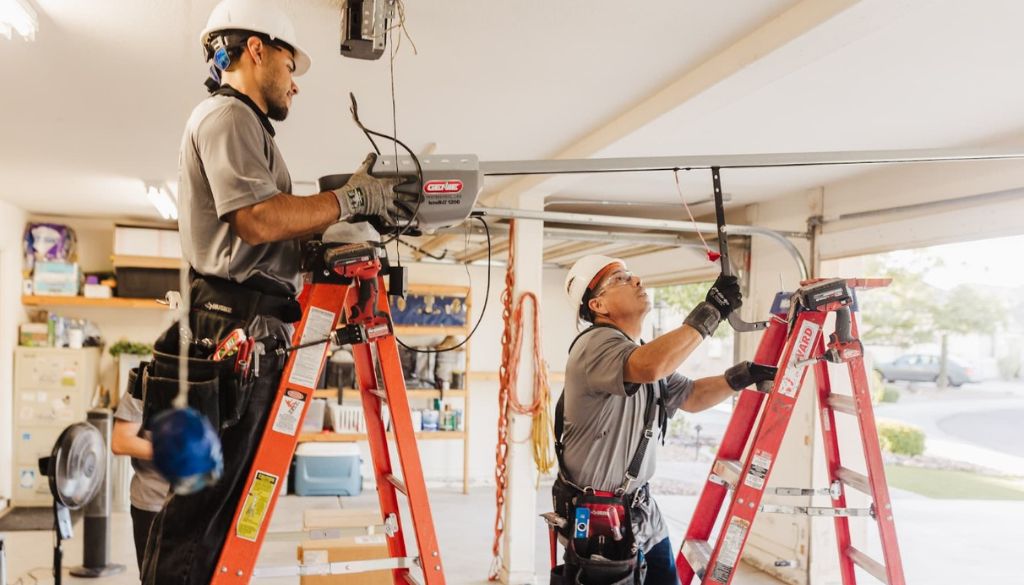
Replacement is not failure, it is often the sensible repair
People sometimes resist replacement because it feels like giving up. In practice, replacement is often the most rational form of repair. If a motor is no longer dependable, replacing it may be the cleanest way to restore performance. If springs have reached the point where the system cannot remain balanced safely, replacement is part of responsible maintenance. If remotes are the issue, replacing them is simply part of keeping the system usable.
The key is to separate frustration from value. A single failed component does not mean the whole door must go. Many garage door service businesses handle targeted replacement of components such as motors, remotes, and springs, precisely because selective renewal can extend the useful life of the broader system. At the same time, selective replacement should not become denial. If multiple parts are worn, or if one replacement would be undermined by another ignored fault, it makes sense to address the set of issues together.
There is also a practical point about older systems in harsh local environments. In places affected by salt fix garage door air, humidity, and heat, hardware can age differently than owners expect. A door may still function, but with more effort, more noise, and less margin for error. Replacement in that setting is not only about what is broken today. It can also be about restoring reliability before a string of smaller failures turns into a larger one.
Signs that a service call should not wait
Not every rattle is a crisis, but some changes deserve prompt attention. A steady decline in performance nearly always leaves clues first.
- The garage door is not closing properly, especially if it starts to reverse, stops partway, or sits unevenly at the floor. The door appears crooked or travels unevenly, which can suggest garage door alignment problems. The opener sounds strained or inconsistent, particularly if the door itself no longer moves smoothly. The door suddenly feels much heavier or behaves differently by hand, which can point to spring issues. A previously reliable system becomes erratic without an obvious reason, including inconsistent remote response combined with rough door movement.
These signs do not all point to the same repair, but they do share one thing: waiting rarely improves them. Most of the time, the door keeps working just enough to encourage delay, then fails when the timing is worst.
How to decide between repair, servicing, and replacement
Owners often want a clean yes or no answer. Repair or replace? Book a service or wait? Realistically, the best decision depends on what the symptom is telling you and whether the door has been maintained regularly.
A helpful way to think about it is in layers. If the problem is isolated and the rest of the system is sound, repair is usually the natural first move. If the door is still functioning but clearly degrading, servicing is often the smarter step because it can reveal small issues before they become urgent. If a component has reached the point where it is no longer dependable, or if replacing it is the most efficient way to restore proper performance, then replacement is not overkill, it is the practical answer.
This is especially true when discussing spring work and operator systems. Springs involve safety concerns that rule out casual experimentation. Openers, meanwhile, should be judged in context. A garage door opener repair makes sense when the operator is truly the problem. It makes less sense when a struggling motor is only the visible symptom of a door that is out of alignment or no longer properly balanced.
Homeowners in coastal conditions have one more factor to weigh. Heat, humidity, and salt air can speed up wear, which means small symptoms deserve a bit more respect. A stiff hinge, a strained motor, or an uneven close may not stay small for long in those environments. Regular attention tends to pay back more quickly there than it does in gentler climates.
A practical maintenance mindset saves money and frustration
The most reliable garage doors are not necessarily the newest ones. They are often the ones that receive steady, sensible attention. A door does not need to be fussed over, but it does need to be taken seriously when its behaviour changes. That is the real value of combining repairs, servicing, and replacement instead of treating each issue as a one-off nuisance.
An annual professional service is a sensible baseline, particularly where local conditions are harsh. Between those visits, owners do not need to become technicians. They just need to notice when the door sounds different, closes unevenly, or starts to hesitate. Early action turns many stressful failures into manageable jobs.
There is no magic phrase that will fix every underperforming door. But the right pattern is consistent. Look at the whole system. Respect the risks around springs. Do not assume the opener is always the culprit. Treat garage door alignment as a performance issue, not just an appearance issue. Replace components when replacement is the sounder choice, not when frustration finally boils over.
That is how you fix garage door performance in a way that lasts. Not by chasing symptoms one by one, but by giving the door the same practical attention you would give any other hardworking part of the home.